The Benefits of Practical Learning in Student Education
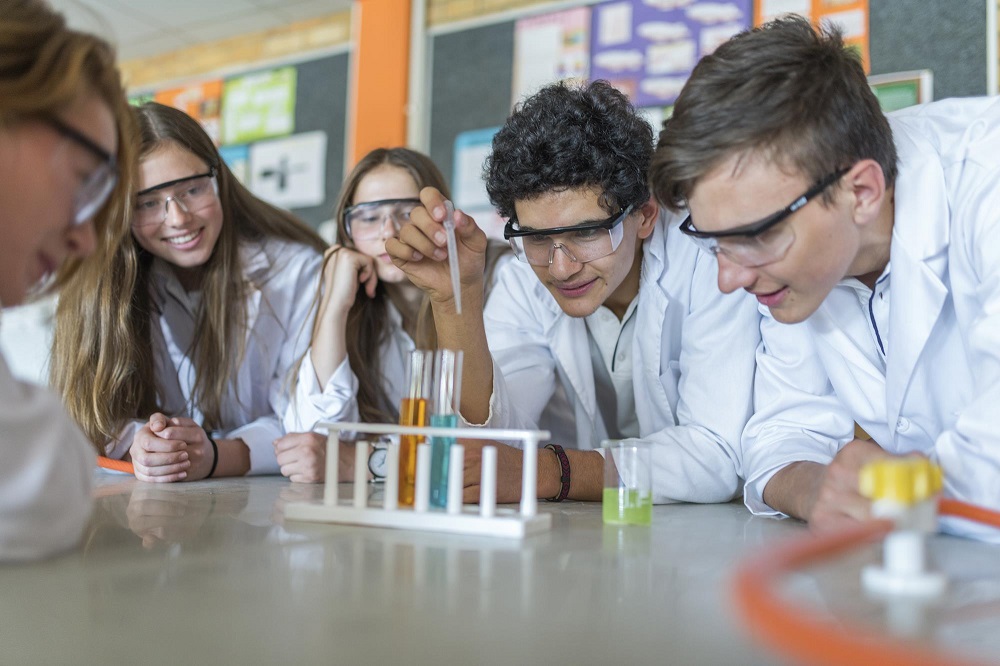
For generations, the standard image of formal education has involved students sitting quietly at desks, listening to lectures, and memorizing facts from heavy textbooks. While reading and lectures establish a foundational base of knowledge, relying on them exclusively leaves a major gap in a student’s development. The modern global economy demands individuals who can think critically, solve complex problems, and apply theoretical ideas to real-world situations. To bridge this gap, educators are increasingly prioritizing practical learning models.
Practical learning, often referred to as experiential learning or hands-on education, is an instructional approach that emphasizes direct experience, physical experimentation, and active problem solving. Instead of simply reading about how a biological cell functions or memorizing architectural equations, students actively conduct laboratory experiments, build physical models, or participate in interactive simulations. This shift from passive absorption to active participation fundamentally changes how knowledge is processed, retained, and utilized.
Deepening Conceptual Understanding Through Application
One of the greatest challenges of purely theoretical education is that concepts can remain abstract and disconnected from reality. A student might memorize a mathematical formula to pass a written exam, but completely fail to see how that formula relates to structural engineering, financial forecasting, or computer programming.
Translating Theory into Reality
Practical learning forces a student to confront the real-world mechanics of a theory. When students apply a concept with their hands, they see the immediate cause-and-effect relationships that text on a page cannot fully convey. For example, learning about the laws of thermodynamics through a textbook can feel dry and confusing. However, when students physically build a basic heat engine or measure heat transfer in a chemistry lab, the abstract laws transform into visible, tangible realities. This conversion from theory to practice cements the information in the student’s mind far more effectively than rote memorization.
Overcoming the Flaws of Rote Learning
Rote learning—the process of repeating information until it is memorized—often leads to superficial understanding. Students become adept at regurgitating definitions on test day, only to forget the material entirely a few weeks later. Practical education targets deeper cognitive processing. Because students must actively think about how to manipulate materials, analyze unexpected outcomes, and troubleshoot errors during a hands-on project, the knowledge becomes embedded in their long-term memory.
Fostering Critical Thinking and Problem-Solving Skills
The real world rarely presents problems in neat, predictable packages with single-sentence answers. Unexpected variables, limited resources, and conflicting data are standard challenges in any professional career. Standard classroom environments often shield students from these realities, whereas practical learning thrives on them.
Embracing Trial and Error
When a student conducts a physical experiment or builds a technical prototype, things rarely go perfectly on the first attempt. A circuit might short out, a chemical reaction might yield unexpected results, or a coding script might crash. These failures are not setbacks; they are the core engine of the learning process. Practical activities teach students how to analyze a failure, isolate the malfunctioning variable, and iterate on their design. This process builds immense cognitive resilience and sharpens investigative skills that are universally applicable across all industries.
Encouraging Collaborative Innovation
Many hands-on learning tasks are structured around team objectives, such as group robotics competitions, engineering challenges, or collaborative scientific research. Working in these environments mirrors the modern workforce. Students must learn to communicate complex ideas clearly, negotiate differing viewpoints, delegate tasks based on individual strengths, and manage project timelines collectively. These soft skills are just as crucial to long-term career success as technical knowledge.
Maximizing Student Engagement and Motivation
Ask any group of students what causes them to lose interest in school, and the most common response is boredom born from a lack of perceived relevance. Sitting through hours of unidirectional lectures naturally leads to mental fatigue and distraction.
-
Intrinsic Motivation: Practical learning leverages natural human curiosity. When students are given an active role in their education, they shift from passive observers to active investigators. The desire to see if a mechanism will work or to discover the outcome of an experiment creates a powerful sense of intrinsic motivation.
-
Catering to Diverse Learning Styles: Every classroom contains a mix of visual, auditory, and kinesthetic learners. Traditional lectures heavily favor auditory and visual students, often leaving kinesthetic learners—those who learn best through movement and touch—at a severe disadvantage. Practical learning levels the playing field by providing physical, tactile stimuli that keep kinesthetic students deeply engaged and focused.
-
Immediate Feedback Loops: In a traditional setting, a student hands in an assignment and waits days or weeks for a grade to understand if they mastered the material. Hands-on learning provides instantaneous feedback. If a bridge model collapses under weight, or if a piece of software code fails to execute, the student knows immediately that their current approach requires adjustment.
Accelerating Career Readiness and Technical Competency
The ultimate goal of any educational system is to prepare students to navigate the adult world and build viable careers. A persistent complaint from employers across the globe is the existence of a skills gap: many college graduates possess impressive transcripts but lack the practical ability to perform job tasks on day one.
Practical learning closes this gap by introducing students to industry-standard tools, software, and workflows early in their development. Whether it is learning how to operate digital fabrication equipment, utilizing professional graphic design suites, or conducting standard medical laboratory panels, students gain concrete, resume-building experience. When entering the job market, a candidate who can talk passionately about physical projects they built, managed, or diagnosed possesses a significant competitive advantage over a candidate who has only read about those processes in a classroom setting.
Frequently Asked Questions
Does an emphasis on practical learning mean that theoretical education is no longer valuable?
Theoretical education remains absolutely vital to a complete academic foundation. Practical learning is not a replacement for theory, but rather its necessary companion. Without theory, practical work becomes mindless trial and error lacking direction or broader meaning. The most effective educational models create a continuous loop where theory explains the underlying rules, and practical work validates and deepens the understanding of those rules.
How can schools implement hands-on learning in subjects that are traditionally abstract, like history or literature?
While science and math have obvious physical applications, humanities subjects benefit immensely from experiential models. In history, this can involve analyzing physical local artifacts, conducting oral history interviews within the community, or participating in structured historical debates and mock trials. For literature, students can adapt scenes from novels into scripts, analyze the psychological motivations of characters through mock depositions, or engage in creative writing workshops that mimic the stylistic choices of classical authors.
Is practical learning more expensive for school districts to fund compared to traditional methods?
Setting up specialized environments like laboratories, maker spaces, woodshops, and computer labs does require a higher upfront capital investment for equipment and raw materials. However, highly impactful practical learning can also be executed using low-cost, everyday items. Design challenges using cardboard, basic electronics components, or outdoor nature observations require very little funding while delivering identical cognitive benefits regarding problem solving and critical thinking.
How do educators fairly grade and assess a student during a fluid practical learning project?
Assessment in a practical setting shifts away from standard multiple-choice testing toward rubric-based portfolios and performance evaluations. Teachers evaluate the student’s systematic process, their troubleshooting methodology, their collaboration skills, and their ability to explain the logic behind their final product. This form of assessment provides a far more comprehensive look at a student’s true competency than a singular memory-based exam score.
Does practical learning take up too much classroom time compared to reading a textbook chapter?
Hands-on activities undeniably require more time to set up, execute, and clean up than reading a chapter or watching a presentation. However, the time investment must be weighed against the efficiency of retention. While a teacher can lecture through five topics in an hour, if the students retain almost none of it long term, that hour was inefficiently utilized. Spending three hours on a single comprehensive practical project that guarantees lifetime mastery of a core principle is a highly efficient use of academic time.
Can practical learning models be effectively adapted for online and remote education?
Online education has adapted to experiential learning through software tools, virtual reality, and physical take-home kits. Students can utilize advanced digital simulators to conduct virtual chemistry experiments or build virtual circuits safely on a screen. Additionally, many modern online courses ship physical material packs directly to students, allowing them to follow along with interactive, hands-on video tutorials from their homes.